 Vero Water Recovery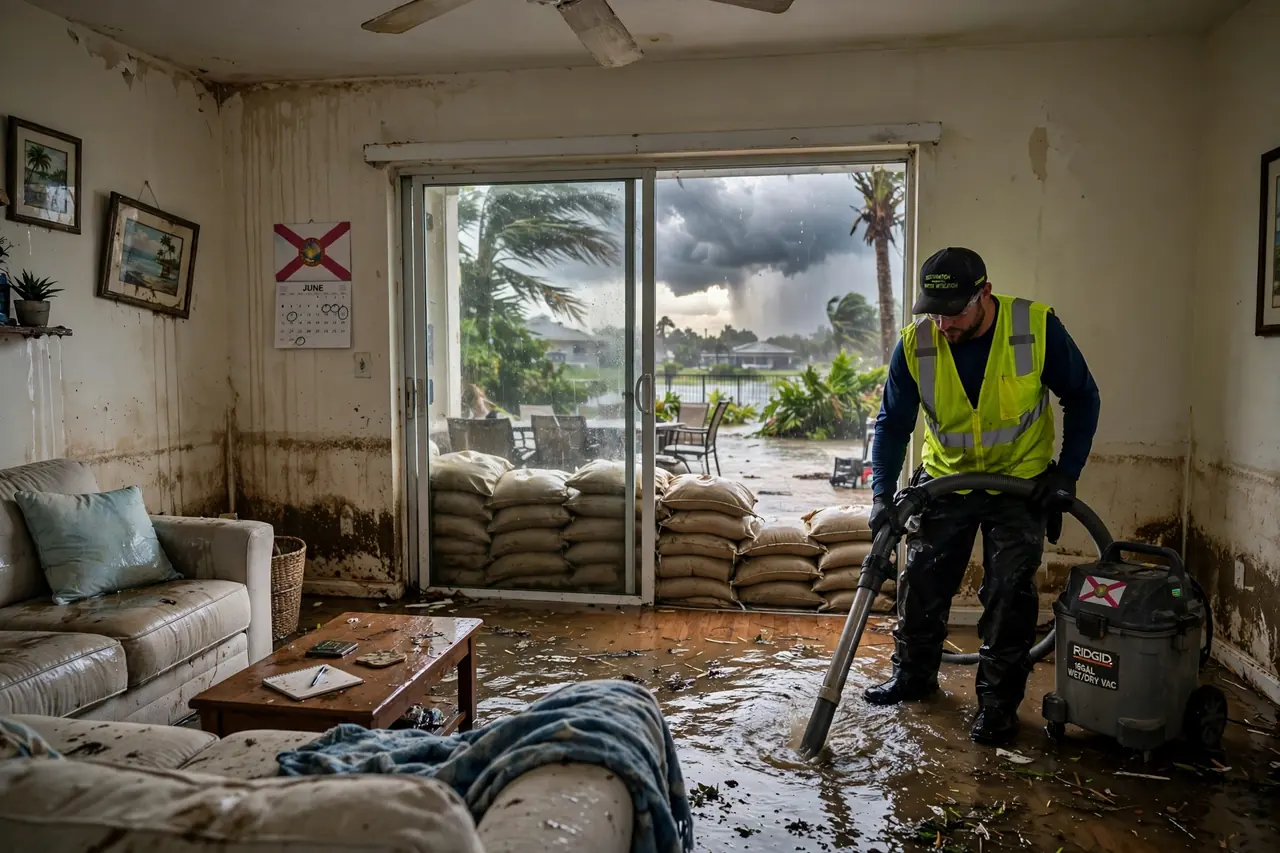
Water is spreading through your home right now. Panic wastes the minutes that matter — this checklist doesn't. Follow these eight steps in order to protect people first, limit damage second, and set up professionals for success third.
Step 1 — Protect people first
Before anything else: stay out of standing water until you know it's safe. Water and electricity are a lethal combination — if water is near outlets, appliances, or your breaker panel, don't wade in.
- Turn off power to affected areas at the breaker only if the panel is dry and safely reachable.
- Keep children and pets completely away from flooded areas.
- If water may be contaminated (sewage backup, floodwater from outside), treat it as hazardous — don't touch it without protection.
- Watch for slippery floors, floating debris, and compromised flooring.
Step 2 — Stop the source (if safe)
Every minute of active flow multiplies the damage. If you can safely reach it:
- Fixture leak: turn the valve behind the toilet, sink, or appliance.
- Pipe burst: shut the main water valve — usually near the street, in the garage, or by the water heater. Every homeowner should know where this is before an emergency.
- Appliance: unplug it (if dry) and shut its supply valves.
- Stormwater: you can't stop the storm — place towels at entry points and move valuables instead.
Step 3 — Save what matters most
Water damage is triaged like an emergency room — irreplaceable items first:
- Electronics, laptops, and chargers — move to dry rooms immediately.
- Important documents, passports, and medications.
- Lift furniture legs onto aluminum foil, wood blocks, or plastic — wet wood stains carpet and carpet dyes stain wood.
- Roll up area rugs and move them to a dry area.
Step 4 — Document everything
Your insurance claim lives or dies on documentation. Before moving or cleaning anything significant:
- Photograph water lines on walls, every affected room, and damaged belongings.
- Video a slow walkthrough narrating what you see.
- Photograph the source if visible (burst pipe, failed hose).
- Save receipts for any emergency purchases.
Step 5 — Call for professional extraction
This is the step most people delay — and the delay is what turns a manageable loss into a disaster. Professional extraction equipment removes water 50+ times faster than consumer wet-vacs, and technicians find the hidden moisture you'll miss.
When you call, have ready: the water source, which rooms are affected, whether water is still spreading, and whether it's clean or potentially contaminated.
Vero Beach 24/7: +1 (380) 237-1358
Step 6 — Remove what you safely can
While waiting for professionals, only if the water is clean and shallow:
- Mop or wet-vac standing water.
- Hang wet fabrics and prop up cushions for airflow.
- Don't use your household vacuum — it's an electrocution risk and will be destroyed.
- Don't pull up carpet yourself — improper handling causes more damage.
Step 7 — Start air moving
- Open windows if outdoor humidity allows (in Florida, AC usually beats open windows).
- Run ceiling fans and portable fans pointed at wet areas.
- Turn your AC down a few degrees — air conditioning is a dehumidifier.
- Don't turn on HVAC if ducts may be contaminated or the air handler is wet.
Step 8 — Contact your insurance company
Report the claim as soon as the immediate crisis is managed — most policies require prompt notification. Have your documentation ready and ask:
- What's my deductible, and does this loss exceed it?
- What documentation do you need from me and the restoration company?
- Do I need approval before authorizing demolition or material removal?
Our insurance guide walks through the full claims process.
Stay clear of electrical hazards and contaminated water. Call +1 (380) 237-1358 — we respond 24/7.